✦ UI UX Design Agency for US Businesses

Website Design Services and UI UX Design Services That Help Visitors Take Action

We provide website design services and UI UX design services for US businesses that want more than a pretty homepage. We research your visitors, map their journey, design screens around their goals, and test with real people before anything is built.

Design preview, not a live product

These are static preview cards. They show the kind of screens your project would include, before any code is written.

Homepage preview

Clear headline, one main action, and proof placed where visitors look first.

Mobile checkout preview

Few steps, large touch targets, and no field that does not earn its place.

WireframesClickable prototypeDesign system
✦ The Problem

Pretty pages do not sell. Research-led design does.

Many websites look polished and still fail. Visitors arrive, scan the page, cannot tell what to do next, and leave. The problem is rarely the color palette. It is that the design was built around opinions about beauty, not evidence about visitors. A hero image that wins an internal debate can still hide the one action that matters, and a clever menu can still bury the page that answers the visitor's real question.

Our approach flips that order. As a UX design company, we start with user research, not decoration. We learn who visits, what they came to do, and where they get stuck. Then we design the layout, the words, and the calls to action around those answers. Every screen has a job, every section earns its place, and every design choice can be explained in one plain sentence. That is what turns a website from a brochure into a tool that brings in inquiries, bookings, and sales.

We also design for the full journey, not just the homepage. A visitor may land on a service page, a blog article, or a pricing page, and each of those pages must guide them forward. Our user experience design services cover that whole path, from first click to completed form, so no page becomes a dead end.

✦ What We Design

Design services shaped around your visitors

Pick one service to start, or combine them into a full redesign. Each service feeds the next, so nothing is designed twice.

◎

UX research services

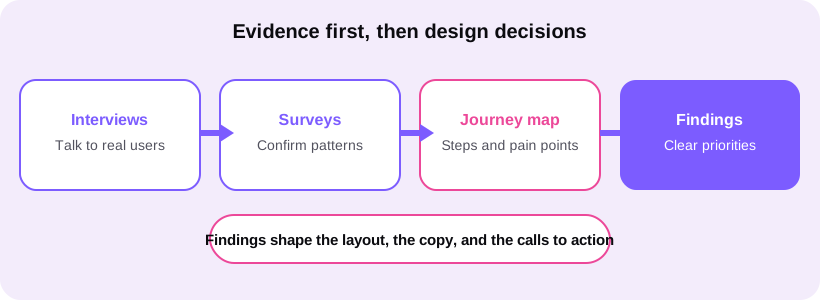
We talk to your visitors and customers through interviews and surveys, then turn what we learn into clear priorities. User research answers the questions that guesswork cannot: who visits, what they want, and what stops them. Every later design decision traces back to this evidence.

⌕

UX audit

We review your current site the way a first-time visitor experiences it, screen by screen. The audit flags confusing navigation, weak calls to action, and pages that lose people. You receive a ranked list of fixes, so the most damaging problems are solved first.

▤

Information architecture

We organize your pages and menus so visitors find what they need without thinking. Good structure groups related content, names sections in plain words, and keeps the path to contact or checkout short. This work happens before visual design, because no color scheme can rescue a confusing structure.

✎

Wireframing

Wireframes are simple black and white layouts that show what goes where on each page, before any visual styling. They let you approve the structure early, when changes are cheap. We build wireframes for key pages first, so the whole site is agreed before detailed design begins.

⬢

UI design services

Our UI design services turn approved wireframes into finished screens in Figma, with your brand, your photography, and your tone of voice. Buttons, forms, and layouts follow one consistent style, so the site feels like one product rather than a set of unrelated pages. You review real screens, not vague mood boards.

▦

Design system development

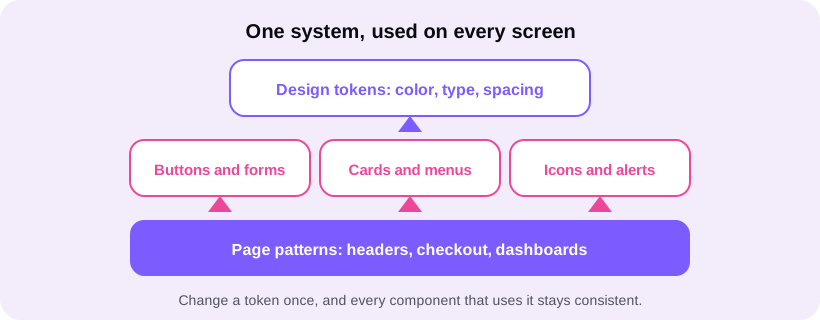
We build a reusable design system with design tokens for color, type, and spacing, plus a component library of buttons, cards, forms, and menus. Your team reuses these pieces on every new page, which keeps the site consistent and makes future updates faster and cheaper.

◐

Usability testing services

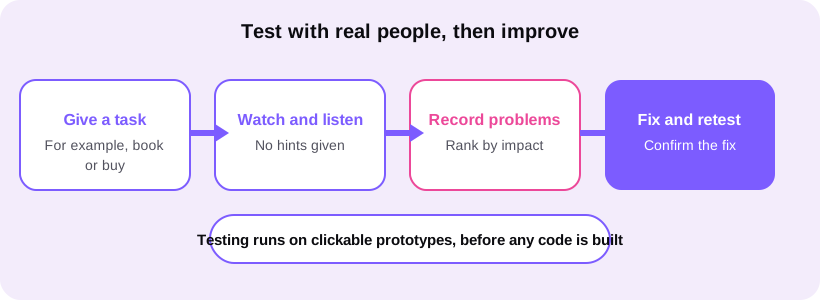
We watch real people try real tasks on clickable prototypes, such as booking a call or completing a purchase. Where they hesitate, we fix the design and test again. Usability testing services catch problems while they are still cheap to fix, long before development starts.

✦

Branding and visual identity

When your brand needs sharpening, we refine logos, color, typography, and imagery so the site looks like you at your best. Branding work stays tied to the same research, so the new look supports the same visitor goals instead of pulling attention away from them.

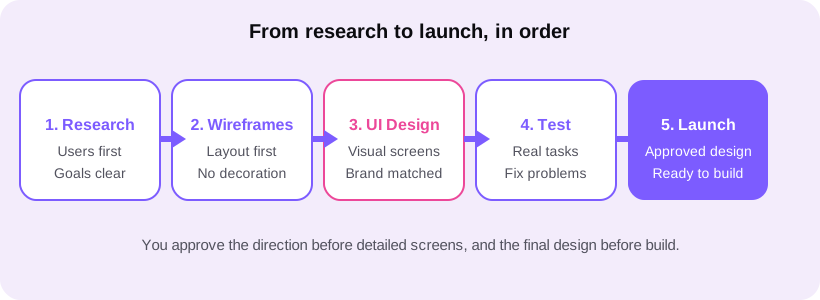
Diagram showing how our website design services move from research to wireframes, UI design, testing, and launch.
The design path: research first, structure second, visuals third, testing before build.
✦ Comparison

Research-led design vs decoration-only design

Both approaches produce a good-looking site. Only one is built to convert visitors into customers.

What to compareResearch-led design from EsaholicDecoration-only design
Starting pointVisitor research, goals, and journey mappingA style the designer likes, or a trend
Page structureWireframes approved before visual designLayout decided while styling, so structure drifts
TestingClickable prototypes tested with real peopleReviewed internally, by people who already know the site
Calls to actionOne main action per page, placed where visitors lookSeveral competing buttons, or none at all
ConsistencyA design system and component library for every pageEach page styled separately, so the site slowly falls apart
After launchA/B testing ideas ranked by evidence, not opinionRedesigns based on whoever speaks loudest
✦ Access for Everyone

Accessible and responsive design, built in from the start

Good design works for everyone, including visitors who use a keyboard, a screen reader, or a phone on a slow connection. We design to WCAG guidance, with readable contrast, clear focus states, and text that stays legible when enlarged. Forms carry plain labels, errors explain how to fix them, and nothing important relies on color alone. We frame this as accessibility readiness: we build to recognized standards, including ADA and Section 508 guidance, and we test with keyboard navigation and screen reader checks, but we do not claim formal certification on your behalf.

Responsive design gets the same treatment. We design mobile layouts first for most projects, because most visitors arrive on phones, then adapt the layout for tablets and desktops rather than shrinking a desktop page. Touch targets stay large, menus stay reachable, and checkout stays usable with one hand. The result is one site that feels made for every screen, not a desktop site squeezed onto a phone.

Where platform guidance applies, we follow it. Google Material Design patterns suit Android-heavy audiences, while Apple Human Interface Guidelines suit iOS-heavy ones, and we choose based on your visitors rather than habit. Nielsen Norman Group methods inform our research and testing approach, from how we write task scenarios to how we report findings in plain language your team can act on.

✦ How It Works

From discovery to delivery, with your approval at every step

We follow the Double Diamond process: open up to learn, narrow down to decide, open up to create, then narrow down to deliver.

1

Discover

We research your visitors, your competitors' presentation, and your current site's weak points. Interviews, surveys, and analytics review produce findings you can read in plain language. Approval point: you agree the findings and the priorities before any design begins.

2

Define

We turn findings into a clear brief: who the site serves, what each page must achieve, and how success will be judged. Journey mapping shows each step a visitor takes, and where they drop off. Approval point: you sign off the brief, the sitemap, and the page goals.

3

Design

We build wireframes, then finished screens in Figma, working in tools your team can open and comment on, including Figma, Adobe XD, Sketch, or Framer when your team prefers them. Early concepts are reviewed before detailed pages, so direction changes stay cheap. Approval point: you approve the visual direction, then each key screen.

4

Test

We test clickable prototypes with real people, fix what confuses them, and test again. A/B testing plans are prepared for launch, so later improvements are decided by visitor behavior rather than opinion. Approval point: you see the test findings and the fixes before handover.

5

Deliver

We hand over source files, the design system, and developer specifications, and we walk your developers through them. If we build the site too, the same files move straight into development with no reinterpretation. Approval point: you accept the final delivery against the original brief.

Diagram showing how our ux research services turn interviews, surveys, and journey mapping into clear design findings.
Research in the Discover stage shapes every later decision, from sitemap to final screens.
✦ Deliverables

What you receive when the design is done

You receive more than a set of pictures. You receive a complete handover package that any competent development team can build from, and that your own team can extend later. The package includes Figma source files with organized layers and named styles, so nothing is hidden inside flattened images. It includes the design system with its component library, covering buttons, forms, cards, menus, and alerts, plus the design tokens that define color, type, and spacing in one place.

You also receive developer specifications for every screen: measurements, spacing, responsive behavior, and interaction states such as hover, focus, and error. Research findings and test reports come with the package too, so future changes start from evidence rather than fresh debate. Finally, you receive a short usage guide that explains how to add a page, reuse a component, and keep new content consistent with the system. Everything is yours, with full ownership, and nothing is locked inside a tool only we can open.

✦ Who It Fits

Who benefits most from research-led design

If visitors arrive but do not act, design research usually finds the reason faster than more traffic will.

⌂

Service businesses

Consultants, clinics, law firms, and agencies need visitors to trust them fast and book a call. We design service pages around proof, plain pricing signals, and one clear booking action, so interest turns into inquiries.

▣

Online stores

Stores lose sales on confusing product pages and long checkouts. We simplify product layouts, filters, and checkout steps, and test them with shoppers before development, so more carts reach payment.

⬡

Software and SaaS products

Product design services for software teams cover marketing pages, onboarding flows, and dashboards. We map the path from trial signup to first success, then design each step to reduce drop-off and support tickets.

▤

Startups launching fast

Startups need a site that looks credible from day one without a six month design program. We run a focused research and design sprint, approve direction early, and deliver screens your developers can build immediately.

♡

Nonprofits and membership sites

Donations, signups, and memberships depend on trust and simple forms. We design donation and signup flows with short steps, clear impact statements, and accessible forms that work for every supporter.

✎

Teams redesigning a tired site

If your site has grown page by page over years, it probably feels patched together. A UX audit plus a new design system gives you one consistent look, a cleaner structure, and a foundation your team can maintain.

Diagram showing how our usability testing services observe real tasks, record problems, and improve the design before launch.
Usability testing with real tasks shows what analytics alone cannot: where visitors hesitate and why.
✦ Tools and Standards

Tools and standards behind every screen

We design in Figma by default, because it lets your team view, comment, and approve screens in a browser without installing anything. When your team already works elsewhere, we also deliver in Adobe XD, Sketch, or Framer, and we keep the same structure and naming in every tool. Prototypes are clickable, so you review flows rather than isolated pictures: you tap through the journey exactly as a visitor would.

Standards keep the work honest. WCAG guidance shapes contrast, focus, and text sizing, while ADA and Section 508 guidance inform public sector and accessibility sensitive projects. Google Material Design and Apple Human Interface Guidelines inform platform specific patterns, and Nielsen Norman Group methods shape how we run research and report results. Tools change, but these standards give your design a stable foundation that survives the next redesign of someone else's trend cycle.

Diagram showing how design system development turns color and type tokens into reusable components and page patterns.
A design system turns one-off screens into reusable pieces, so new pages stay consistent without new design work.
✦ Engagement

From first call to handover: how working with us feels

Engagement starts with a free consultation. You describe your site, your visitors, and what is not working, and we tell you honestly whether design research is the right next step or whether something else, such as faster development or clearer copy, would help more. If design is the right move, you receive a fixed scope and a fixed price after a short discovery call, with dated milestones and named approval points.

During the project, you review work in Figma at each approval point and leave comments directly on the screens. There are no surprise reveals at the end, because direction is agreed early and key screens are approved as they are designed. After handover, we stay available for questions while your developers build, and for small refinements that testing reveals after launch. As a UI UX design agency, we treat the handover as the start of your site's working life, not the end of our interest in it.

Whether you need full UX design services for a redesign, a focused audit, or a design system your team can build on, the engagement stays the same: clear scope, fixed price, visible progress, and your approval before each stage moves forward. If you are comparing providers, ask any UX design company you speak to for the same three things: their research findings format, their approval points, and what exactly you own at handover. We are glad to answer all three on the first call, and as a user experience design agency we put those answers in writing before work starts.
✦ FAQs · Website Design Services

Questions buyers ask before they start

How much do website design services cost?

You receive a fixed scope and a fixed price after a free discovery call. We do not start design work until you approve that scope, so there are no surprise charges. The price depends on the number of pages, the amount of research, and whether you need a full design system.

Do you redesign existing websites, or only design new ones?

We do both. For a redesign, we start with a UX audit of your current site, so we keep what already works and fix what confuses visitors. For a new site, we start with research into your visitors and your goals, then build the design from there.

Will I own the design files?

Yes. You own the Figma source files, the design system, the design tokens, and the developer specifications. You can take them to any development team, or ask us to build the site from them.

How long does a design project take?

It depends on scope. After discovery, you receive dated milestones for research, wireframes, visual design, testing, and handover. Approval points at each stage keep the timeline honest, and you always know what happens next.

Can you also build the website after designing it?

Yes. Our website development services team builds directly from the approved design files, which avoids the usual gap between design and code. If you already have developers, we hand over specifications they can build from without guesswork.

What if I do not like the first design direction?

That is exactly why we agree the direction before detailed screens. You review early concepts first, and we revise at that approval point. Detailed pages are only designed once the direction is approved, so changes stay cheap and fast.

Start with a free design consultation

Bring your current site and one goal. Leave with a clear next step, even if that step is not Esaholic.

Book a Free Consultation →

Prefer email? Write to [email protected] with your site address and your goal, and we reply within one US business day. You can also use the contact form on our contact page to book directly.